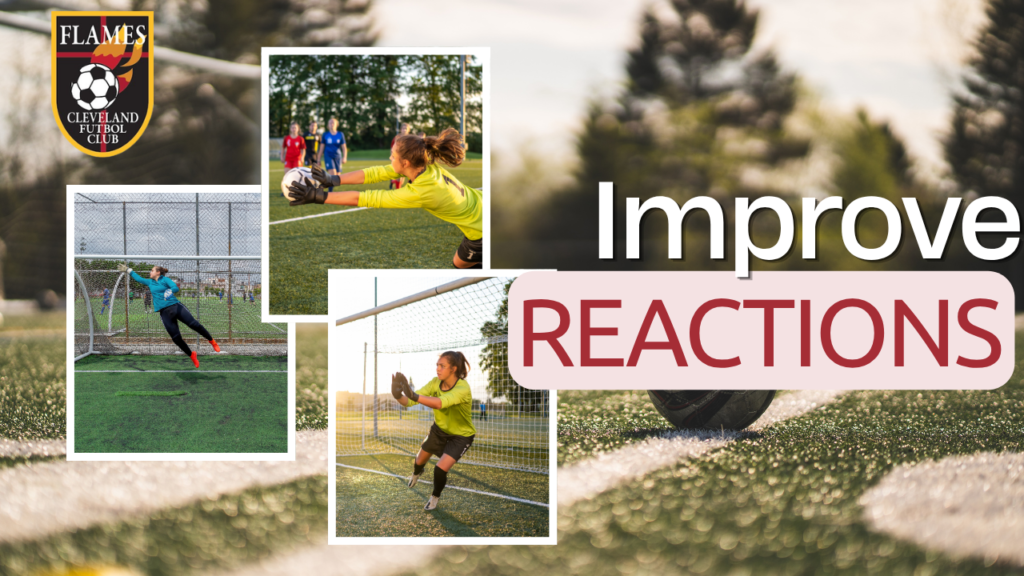
Building The Quickness Every Goalkeeper Needs
Goalkeeping is one of the most unique positions in soccer.
A goalkeeper has to think, move, react, communicate, and make decisions in moments that happen fast. One second the keeper is organizing the back line. The next second there is a shot through traffic, a deflection off a defender, a loose ball in the box, or a one-on-one chance breaking toward goal.
That is why reflexes and reaction time matter so much.
But great goalkeeping is not just about being naturally quick. Reflexes can be trained. Reaction speed can improve. Footwork can become sharper. Hands can become cleaner. Body shape can become more efficient. The more a goalkeeper repeats realistic movements in training, the more prepared they become for the chaos of the game.
At Cleveland Futbol Club, we want goalkeepers to train with purpose. It is not enough to just face shots and hope to get better. Keepers need drills that challenge their eyes, feet, hands, balance, decision-making, and ability to reset quickly after each save.
Below are five goalkeeper drills that can help improve reflexes, reaction time, and shot-stopping confidence.
Why Reflex Training Matters For Goalkeepers
A goalkeeper does not always get a perfect view of the ball.
Shots can come through defenders. Crosses can be redirected. Balls can bounce awkwardly. Attackers can shoot from close range. A deflection can turn a routine save into a scramble.
Reaction training helps goalkeepers handle those unpredictable moments.
Strong reflexes help keepers:
- React quickly to shots and deflections
- Adjust their body when the ball changes direction
- Get set faster between saves
- Improve hand-eye coordination
- Move efficiently in tight spaces
- Stay calm during high-pressure moments
- Recover quickly after the first save
Reflex training is not just about moving fast. It is about moving fast with control.
A keeper who reacts quickly but has poor body shape may still give up rebounds. A keeper who moves fast but cannot reset may struggle with second shots. A keeper who dives without balance may not be ready for the next action.
The goal is quick, clean, controlled reactions.
Start With The Goalkeeper Set Position
Before working on reaction drills, goalkeepers need to understand the importance of being set.
A strong set position gives the keeper the best chance to react in any direction.
A good set position includes:
Feet about shoulder-width apart
Knees bent
Weight slightly forward
Hands ready in front of the body
Chest balanced
Eyes on the ball
Body relaxed but alert
A goalkeeper should not be flat-footed. They also should not be bouncing too much when the shot is taken. The keeper needs to arrive in a balanced position before the ball is struck.
A great save often starts before the shot.
It starts with being set.
1. Reaction Ball Drill
A reaction ball is a small, uneven ball that bounces in unpredictable directions. Because the bounce is not normal, the goalkeeper has to read, adjust, and react quickly.
This drill is excellent for developing hand-eye coordination and improving reactions to unexpected deflections.
How To Perform The Drill
Stand a few yards away from a wall.
Throw the reaction ball against the wall. As it bounces back, react quickly and try to catch it cleanly. If catching is too difficult at first, focus on blocking or parrying the ball under control.
After each rep, reset your feet and get back into a ready position.
Coaching Points
Stay light on your feet.
Keep your hands in front of your body.
Watch the ball closely after it hits the wall.
React with small, quick movements.
Reset after every catch or deflection.
Why It Helps
In games, the ball does not always travel cleanly. It can deflect off legs, bounce off the ground, spin awkwardly, or redirect off another player.
This drill trains goalkeepers to handle the unexpected.
Progressions
Start close to the wall and increase distance as you improve.
Use one hand only for certain reps.
Catch with both hands when possible.
Have a partner throw the reaction ball from different angles.
Add footwork before the catch.
The key is not just reacting. The key is reacting, controlling the ball, and resetting quickly.
2. Rapid-Fire Shots
Goalkeepers rarely get to make one save and relax.
Many dangerous moments require a keeper to make the first save, recover, reset, and be ready for the next shot. Rapid-fire shooting helps train that ability.
This drill focuses on reaction time, save technique, recovery, and composure under pressure.
How To Perform The Drill
A coach or teammate stands around the top of the box or closer, depending on age and ability.
The shooter plays several shots in quick succession from different angles. The goalkeeper must react, save, recover, and reset for the next ball.
The shots should be challenging but controlled. This drill is not about blasting the ball at the goalkeeper. It is about creating game-like repetition.
Coaching Points
Get set before each shot.
Use proper hand shape.
Control rebounds when possible.
Recover quickly after diving.
Do not stay on the ground.
Reset your feet before the next shot.
Why It Helps
Rapid-fire shots build the keeper’s ability to stay composed during scrambles in the box. These moments happen often in games after rebounds, blocked shots, loose balls, and corner kicks.
A goalkeeper who can reset quickly gives the team a much better chance to survive pressure.
Progressions
Start with three shots in a row.
Build to five or six shots.
Vary the height of the shots.
Add one low shot, one mid-height shot, and one shot to the opposite side.
Add a rebound finish after the first save.
Quality matters more than quantity. If the keeper’s form breaks down, slow the drill down.
3. Close-Range Reaction Saves
Close-range saves are some of the hardest moments for a goalkeeper.
The ball arrives quickly, the attacker is near goal, and there is very little time to think. These situations require bravery, balance, quick hands, and strong body shape.
This drill helps goalkeepers react to shots from short distance while staying controlled.
How To Perform The Drill
The goalkeeper starts 6 to 8 yards away from a coach or partner.
The shooter plays controlled shots toward the keeper’s feet, body, or corners. The goalkeeper reacts quickly to block, catch, or parry the ball.
For younger players, start with softer shots and build speed gradually.
Coaching Points
Stay big and balanced.
Keep hands ready.
Move toward the ball when possible.
Do not turn away from the shot.
React with the hands and feet together.
Recover quickly after each save.
Why It Helps
Close-range reaction work prepares keepers for one-on-one moments, rebounds, cutbacks, and shots from inside the box.
These are not always pretty saves. Sometimes the keeper must block with a hand, foot, leg, chest, or body shape. The goal is to keep the ball out and stay ready for the next action.
Progressions
Begin with shots directly at the keeper.
Add shots slightly to each side.
Add low shots near the feet.
Add a second ball for a rebound save.
Add movement before the shot.
This drill should always be done with control and safety. The shooter should challenge the keeper without trying to hurt them.
4. Tennis Ball Or Balloon Drill
Smaller objects can sharpen a goalkeeper’s eyes and hands.
A tennis ball moves quickly and requires clean hand-eye coordination. A balloon moves slowly and unpredictably, forcing the keeper to track flight, adjust body shape, and react with patience.
Both tools can be useful for different reasons.
Tennis Ball Version
Have a partner stand a short distance away and toss tennis balls toward the goalkeeper. The keeper catches the ball using proper hand shape.
The partner can vary the tosses: high, low, left, right, or bouncing.
Coaching Points
Watch the ball all the way into the hands.
Move the feet when needed.
Catch with soft hands.
Keep the body behind the ball when possible.
Reset after every catch.
Balloon Version
A partner tosses or taps a balloon into the air. The goalkeeper must react, move, and keep it from hitting the ground.
This can be used with younger goalkeepers to develop tracking, movement, and coordination in a fun way.
Coaching Points
Stay balanced.
Track the object early.
Move the feet first.
Use both hands.
Keep the eyes locked in.
Why It Helps
Goalkeepers need fast eyes before they can have fast hands. These drills force keepers to track smaller or unpredictable objects, which can improve concentration and coordination.
Progressions
Use two tennis balls.
Catch one-handed.
React after a clap or verbal cue.
Start facing away, then turn on command.
Add footwork before the catch.
This is a great way to train quick reactions without needing a full goal or large field.
5. Cone Footwork With Shot
A goalkeeper’s hands are important, but the feet often make the save possible.
Good footwork helps a keeper get into position before the shot. If the goalkeeper is late, off-balance, or standing in the wrong spot, even great hands may not be enough.
This drill connects movement with shot-stopping.
How To Perform The Drill
Set up cones in a zig-zag pattern.
The goalkeeper starts at the first cone and shuffles quickly through the pattern while staying low and balanced. After reaching the final cone, the keeper gets set and faces a shot from a coach or teammate.
The keeper must react and make the save.
Coaching Points
Stay low while moving.
Do not cross the feet when shuffling.
Keep the hands ready.
Get set before the shot.
Do not drift past the final position.
React after balance is established.
Why It Helps
In games, goalkeepers are constantly adjusting their position. They move across the goal, step forward, recover backward, and shift as the ball moves.
This drill teaches keepers to move quickly, then stop and set before making the save.
Fast feet only matter if the keeper can arrive balanced.
Progressions
Change the cone pattern.
Add a low shot after the footwork.
Add a high shot after the footwork.
Add a second save after the first.
Start with a drop step or recovery movement.
This drill is especially useful because it connects agility with the real purpose of goalkeeper movement: getting into position to make the save.
Bonus: The Reset Habit
One of the most important habits in goalkeeper training is learning to reset.
After every movement, every catch, every dive, and every save, the keeper should return to a ready position.
Many young goalkeepers make the first save but are not ready for the second one. In real games, second chances are dangerous. Rebounds, loose balls, and follow-up shots punish slow resets.
A good reset includes:
Getting back to the feet quickly
Finding the ball
Getting hands ready
Re-centering the body
Communicating if needed
Preparing for the next action
Every drill should include this habit.
Do not just save and stop.
Save, recover, reset.
Safety And Training Quality
Goalkeeper training should challenge players, but it should also be safe and age-appropriate.
Young goalkeepers should not face shots that are too hard or too close for their ability level. The purpose of training is to build confidence and skill, not fear.
Keep These Training Standards
Use controlled service.
Build difficulty slowly.
Focus on technique before speed.
Take breaks when form drops.
Wear proper goalkeeper gloves when needed.
Train on a safe surface.
Make sure the keeper understands the drill before increasing pressure.
Good training builds courage through preparation.
It does not create chaos for the sake of chaos.
Sample Goalkeeper Reflex Training Session
Here is a simple session structure using the drills above.
Warm-Up: 5 Minutes
Light movement
Dynamic stretching
Easy catching
Footwork activation
Basic set position work
Technical Block: 10 Minutes
Reaction ball drill
Tennis ball catches
Hand-eye coordination work
Shot-Stopping Block: 15 Minutes
Close-range reaction saves
Rapid-fire shots
Focus on save, recover, reset
Footwork Block: 10 Minutes
Cone footwork with shot
Shuffle, set, save
Add progressions if form stays strong
Cool Down: 5 Minutes
Light movement
Stretching
Review what felt strong
Pick one focus for next session
This type of session helps goalkeepers train reactions, movement, and technique without losing sight of quality.
Final Thoughts
Goalkeepers need sharp reflexes, but great goalkeeping is about more than quick reactions.
The best keepers combine speed with balance.
They combine bravery with control.
They combine shot-stopping with smart positioning.
They make the first save and recover for the second.
They train their eyes, feet, hands, and mind together.
The five drills in this article can help goalkeepers become quicker, cleaner, and more confident in front of goal:
Reaction Ball Drill
Rapid-Fire Shots
Close-Range Reaction Saves
Tennis Ball Or Balloon Drill
Cone Footwork With Shot
When goalkeepers add these drills into their training routine, they become better prepared for the unpredictable moments that decide games.
A powerful strike from distance.
A deflection through traffic.
A one-on-one chance.
A rebound in the box.
A quick shot from close range.
Those moments demand preparation.
Train the reaction.
Train the reset.
Train the confidence.
That is how goalkeepers grow.
No Comments yet!